Latest News
Payday Super part 1: understanding the new law
Passage of the Payday Super reforms by parliament this week has cleared the way for employee superannuation to be paid by employers more frequently. In the first of a two-part series, this article explains the myriad elements of the new law.

.
This article is the first in a two-part series that explains the new Payday Super (PDS) law and the work that is needed to implement the reforms.
In writing this article, the author has extensively used acronyms for brevity. To assist readers, a list of these acronyms and terms is provided at the end of the article.
The problem is getting bigger
Not paying superannuation for employees is like not paying wages; it’s theft. Wage theft, which includes failing to pay superannuation, became a federal criminal offence on 1 January 2025. Non-payment of superannuation has been an issue for years, and the problem is getting bigger.
The Australian Taxation Office’s (ATO) Superannuation Guarantee (SG) gap data shows that, in 2017–18, unpaid employee superannuation exceeded $3.6 billion. This shortfall has increased by over 70 per cent to $6.2 billion in 2022–23. While the ATO’s gap data shows that 94 per cent of SG is being paid – that is, the vast majority of employers are currently doing the right thing – this still leaves one-in-four workers out of pocket for their retirement, according to the Super Members Council. Its August 2024 report, Fixing unpaid super: Making super fairer for workers and employers alike, suggests this can equate to up to $30,000 less in retirement.
Small business employers are most likely to have unpaid SG. According to the Australian National Audit Office’s 2022 report, Addressing Superannuation Guarantee Non-Compliance, 92 per cent of the businesses audited by the ATO for unpaid SG had a turnover of less than $10 million.
Employees being deprived of their superannuation entitlements was clearly the main driver for the Government’s PDS reforms, first announced in May 2023. But here was a rare opportunity to finally reform the draconian rules that have disincentivised employers from coming forward to report and make good past SG shortfalls.
The PDS reforms, which are about to become law, start on 1 July 2026 and will require employers to pay their employees’ superannuation at the same time as salary and wages, instead of quarterly. Small business employers are most likely to find the cash flow challenges associated with PDS harder to navigate. With less than eight months to go, the race is on to get systems and employers ready for the most substantial change to superannuation in more than 30 years.
Recap of current law
A brief recap of the current law is helpful before we examine the new law. Under the Superannuation Guarantee (Administration) Act 1992 (SGAA), employers are liable for the SG charge if they do not pay the minimum amount of SG contributions for their eligible employees to the correct fund within 28 days of the end of each quarter. Paying 12 per cent of employees’ ordinary time earnings (OTE) to the correct fund by the due date satisfies the employer’s obligation.
Employers who fail to make the minimum contributions for a quarter have a shortfall and must lodge an SG statement and pay the SG charge to the ATO by the 28th day of the second month following the end of that quarter.
The current three components of the SG charge are as follows:
SG shortfall – calculated as 12 per cent of total salaries and wages (instead of OTE, had the amount been fully paid on time);
Interest component – charged at 10 per cent, accruing from the start of the relevant quarter to the later of the quarterly due date or when the ATO receives the quarterly SG statement, which can be years later; and
Quarterly administration fee of $20 per employee.
The SG charge is specifically non-deductible under section 26-95 of the Income Tax Assessment Act 1997 (ITAA 1997). Notably, superannuation is not non-deductible merely because it is paid late. In other words, an employer cannot absolve their obligation to report and pay the SG charge by treating a late payment as non-deductible for income tax purposes.
Further to the above, an employer who fails to provide an SG statement by the due date is liable to pay an additional SG charge under Part 7 of the SGAA, equal to double the amount (200 per cent) of the SG charge. The ATO has a remission power, but not below 100 per cent of the SG charge for quarters from 1 July 1992 to 31 March 2018 (which were covered by the SG amnesty). The ATO’s guidance on remission of the Part 7 penalty is set out in PS LA 2021/3.
The ATO can also impose a 75 per cent administrative penalty for making a false or misleading statement. Further adverse tax consequences of SG non-compliance include director penalties, general interest charge (GIC) imposed on unpaid amounts and choice shortfall penalties.
New law
What is Payday Super?
From 1 July 2026, employers will need to make SG contributions on the same day employees are paid their salaries and wages, called ‘qualifying earnings’ (QE). The date that QEs are paid to the employee is called the ‘QE day’.
Qualifying earnings
A person’s QE include OTE, commissions, payments made under salary sacrifice arrangements, and other payments relevant to the expanded definition of employee in section 12 of the SGAA. This includes payments made under a contract that is wholly or principally for the labour of the person.
What isn’t changing?
No changes have been made to:
The OTE component of QE used to work out an SG amount, which remains 12 per cent of OTE.
The exclusions from the SG framework.
How salary sacrifice arrangements are recognised for SG purposes.
Further clarify the ‘employee versus contractor’ distinction, which remains a bane for employers in navigating their obligations.
When an employer ‘makes a contribution’ is still taken to be when a fund receives the contribution. This is despite stakeholder efforts during consultation that pressed for the date of payment instead. Treating contributions as having been ‘made’ only when they are received by the fund means employers remain liable for the SG charge after the timing is no longer in their hands and delays are due to reasons or factors beyond their control. These can include processing or banking delays by intermediaries and incorrect data provided by employees that thwart the employer’s efforts to make the contribution within the prescribed period.
What is changing?
The key changes and elements of PDS are explained below.
SG charge – the SG charge is equal to the SG shortfall (shortfall) for a QE day, which comprises the total of that QE day’s individual final shortfalls, notional earnings components, administrative uplift amounts and choice loadings.
Shortfall – the current ‘total salaries and wages’ base will no longer be used to work out the shortfall. Instead, the SG charge base has been sensibly aligned with the OTE base used to calculate SG amounts.
Notional earnings – the current ‘nominal interest component’ is being replaced with a new ‘notional earnings component’ (NEC). The NEC will begin to accrue when an employer has a shortfall for a QE day, and it compounds at the GIC daily rate (currently 10.61 per cent) until a late contribution reduces the shortfall to nil. This is an improvement on the current law, as it will be payable only for the period the late contribution is actually outstanding.
Administrative uplift – the current administration component of $20 per employee per quarter is being replaced with a new administrative uplift amount (AUA) for late or non-payment. While employers with a shortfall will be initially liable for an AUA equal to 60 per cent of the shortfall plus the NEC, the AUA can be reduced to nil. The method of reducing the AUA will be prescribed by regulation, so we don’t yet have the details. Whether the Commissioner has previously raised an SG charge assessment or the employer has lodged a voluntary disclosure statement (see below) will be relevant factors in determining whether the AUA is reduced, and by how much.
Choice loading – the choice loading, which forms part of the SG shortfall, is an additional 25 per cent calculated on the value of the eligible contributions for any QE day where the employer has not complied with the choice of fund provisions.
General interest charge – the GIC will accrue on a daily compounding basis on any outstanding SG shortfall and NEC amounts, as well as on any outstanding AUA.
SG charge payment penalty – a new late payment penalty (LPP) (still in Part 7 of the SGAA) will apply to employers that fail to pay the SG charge within 28 days of being assessed. The penalty is equal to 25 per cent of the outstanding amount and increases to 50 per cent if the employer has previously been liable for the penalty in the previous two years. The penalty cannot be remitted and does not accrue GIC. This penalty is more proportionate and applies based on culpability.
Seven-day period – eligible SG contributions received by their employees’ superannuation funds within seven business days after the QE day (the usual period) can reduce the shortfall for that QE day to nil. This replaces the current period of 28 days after the end of a quarter. A ‘business day’ means a day that is not a weekend or a public holiday for the whole of a State or Territory (this would exclude, for example, the Royal Queensland Show, the Royal Hobart Show and the Geelong Cup, which would still count as business days). The draft legislation proposed seven calendar days, but the usual period was changed to seven business days in response to consultation.
Longer period – a longer period of 20 business days (the extended usual period) applies to the first payment of QE for a new employee (including a returning employee) and the first contribution to a different superannuation fund. An extended period also applies where the employer and the QE day are covered by an ‘exceptional circumstances determination’. This is intended to address natural disasters or widespread information and communications technology outages.
Ordering rule – SG contributions are applied for QE days in the order in which they are received by the fund. This means a payment intended for a QE day can be applied to an earlier QE day for which there is a shortfall, even if the employer is not aware of an earlier under- or non-payment. This could result in a shortfall for the current QE day.
Contributions made before the QE day – employers will still be able to make SG contributions in advance, but instead of up to 12 months before the start of the quarter as currently applies, the new rule will be up to 12 months before the QE day. This includes any amounts that exceed the SG amount for a QE day (overpayments); these can be carried forward for up to 12 months.
Voluntary disclosure – the current SG statement is being replaced with a voluntary disclosure statement (VDS). The VDS can be lodged in the approved form at any time before the Commissioner makes an assessment of the shortfall for a QE day. While ‘voluntary’, employers will be incentivised to make prompt disclosures to reduce the AUA. Stakeholder feedback has encouraged the ATO to scrap the archaic SG charge Excel spreadsheets in favour of a digitalised mechanism incorporated into ATO online services.
Deductibility – section 26-95 of the ITAA 1997 has been repealed. This means the new SG charge will be fully deductible for income tax purposes, irrespective of whether the contributions were made on time. However, the GIC and the LPP are non-deductible.
Fund allocation and SuperStream updates – the deadline for superannuation funds to allocate or return contributions that cannot be allocated to an employee’s account is being reduced from 20 business days to three business days. The SuperStream data and payment standards will be revised to allow faster payments via the New Payments Platform and improve error messaging so employers and intermediaries can quickly address errors.
Removal of late payment election – the current election under section 23A of the SGAA, which allows an employer to offset a late payment against the SG charge for a particular quarter, will not be available under PDS. Instead, eligible contributions made late but before the SG charge is assessed will be automatically applied by the fund in the order they are received to reduce shortfalls.
Maximum contribution base – the current maximum contribution base (MCB) is a quarterly earnings amount above which an employer is not liable for the SG charge if they do not make SG contributions (currently $62,500 per quarter, or a yearly equivalent of $250,000). Under PDS, the MCB will instead be applied as an annual limit. Once an employee’s QE exceed the MCB in a financial year, any subsequent QE by that employee in that financial year are disregarded in calculating any shortfall amount. The annual MCB will be the concessional contributions cap divided by 12 per cent (assuming the concessional contributions cap remains unchanged in 2026–27, the MCB would be $250,000).
Employer exemption certificates – currently, an employer shortfall exemption certificate allows a high-income earner with multiple employers to ‘opt out’ of receiving SG for a quarter from one or more of their other employers to avoid exceeding the concessional contributions cap. Employees can apply for these certificates only if they have two or more employers concurrently in the same quarter. To accommodate PDS, the certificates will also be available where an employee has more than one employer in the same financial year, but consecutively. This important modification means that employees who change employers during the year can apply for a certificate where the combined SG contributions made by their former and new employers are likely to exceed the concessional contributions cap. The employee is treated as having reached the annual MCB if a certificate is in force; this can be provided to the new employer.
Where are we now?
After a lengthy consultation period, the legislative reforms moved rapidly through parliament. Introduced on 9 October 2025 and spending just two days before the Senate, the enabling legislation was finally passed on 4 November 2025. At the time of writing, it awaits Royal Assent.
Closing comments
I have covered only the key aspects of the new law, which contains many other nuances beyond the scope of this article.
Next week, in the second of this two-part series, I examine the work that is needed to implement the reforms, the impact the changes will have on employers, and a range of issues that have not been fully addressed in the law.
Acronyms and terms used in this article
AUA Administrative uplift amount
ATO Australian Taxation Office
Extended usual period Longer period of 20 business days after the QE day
GIC General interest charge
ITAA 1997 Income Tax Assessment Act 1997
LPP Late payment penalty
MCB Maximum contribution base
NEC Notional earnings component
OTE Ordinary time earnings
PDS Payday Super
QE Qualifying earnings
QE day Day on which QE are paid
SG Superannuation Guarantee
SGAA Superannuation Guarantee (Administration) Act 1992
Usual period Seven business days after the QE day
VDS Voluntary disclosure statement
Robyn Jacobson is a tax advocate and specialist with over 30 years in the tax profession. Her practical insights and expertise stem from her public practice background and more than 25 years of guiding the profession in her various roles as a professional tax trainer and advocate.
Robyn champions improvements to our tax system, with a focus on SMEs and supporting practitioners.
Robyn is a chartered tax adviser of The Tax Institute and a fellow of both CA ANZ and CPA Australia.
07 November 2025
By Robyn Jacobson
accountantsdaily.com.au
Latest Articles

Most Reliable Car Brands in 2026
Check out which car brands are the most likely to stay on the road and not cost you a fortune to...

Calculate your costs to start a business
The following outlines what you should consider when looking at the costs involved in starting your own...
Are you ready for Payday superannuation?
From the first payday on or after 1 July 2026, employer are required to meet new super...

Support for rebuilding after natural disasters
If you have lost your home, property or business to a natural disaster, the Federal/State and territory...

When to Update Your Business Trading Terms
Trading terms are the contract that outlines how you do business. They provide an overview of the rights and...

Super balance not a priority for young Aussies, SMC reports
Despite the long-term benefits of well-managed super, many aren’t motivated or don’t know where to...

ATO crackdown on profit restructuring leading to higher tax bills: RSM
Recent ATO guidance on profit allocation will result in higher personal income tax bills for professionals...

Will a shareholders agreement protect a business from a family law dispute?
When the personal intersects with the commercial – specifically, in the context of a family law dispute â€...

Rare and vanishing: Animals That May Go Extinct Soon
Check out which animals are on the brink of extiction and If we don't act now, they could vanish...

Accountants must keep ‘watchful eye’ on financial abuse
Accountants are being urged to be aware of the risks and signs associated with financial abuse, as estimates...

Running a self-managed superannuation fund (SMSF) gives you control over your retirement savings. . It...

If you’re among the more than three million Australians with a student loan, there’s welcome...

Accounting & Bookkeeping
Modern business demands up to date accurate financial information.
We can take care of all your bookkeeping and accounting needs, including the preparation of your annual accounts and periodic management accounts for tax, business appraisal and planning purposes.
We can also assist with meeting your reporting requirements including Business Activity Statements, PAYG Withholding and Instalment Activity Statements.
We will discuss your requirements with you and provide you with tailored information and constructive advice on a regular basis.
If you would like further information you can contact us on (02) 9300 3000 or .

Acquisitions & Mergers
Whether you are considering buying or selling a business, we are able to assist you in this transaction by providing experienced advice.
Each transaction is different and needs to be assessed on its individual merits. There are a number of accounting and taxation opportunities with these transactions and our experience can ensure you are maximising your benefits.
If you would like further information you can contact us on (02) 9300 3000 or .

Budgeting
A good budget is a necessity in a good business plan. It is one of the best business tools we have, allowing us to set financial targets and measure our performance.
In addition to goal setting value, budgets will often improve your chances of acquiring funding. Financers often require budgets as a prerequisite for funding approval.
We have extensive experience with assisting clients in the budgeting process.
If you would like further information you can contact us on (02) 9300 3000 or .

Business Start-Ups
Before commencing a new business, the following are some of the key items that need to be considered:
- Decide on the most suitable structure for your business – sole trader, partnership, trust or company
- Prepare a business plan, cashflow projections, budgets, and trading forecasts
- Assess your finance requirements, advise on the best sources of finance, and draw up the necessary proposals
- Establish a good working relationship with your bank
- Register for a Tax File Number and an Australian Business Number with the ATO
- Complete registration procedures with Australian Securities and Investments Commission
- Deal with company secretarial issues
- Set up a recording system for your internal use and for complying with statutory requirements
Each new business is different and needs to be considered in relation to your individual circumstances and our experience can ensure you are maximising your opportunities.
If you would like further information you can contact us on (02) 9300 3000 or .

Charitable Institutions
Charitable institutions are set up to hold money or assets and carry out activities for the benefit of the community. In Australia, a variety of charitable institutions exist including:
- Various forms of charitable trusts
- Companies limited by guarantee
- Unincorporated associations
- Deductible gift recipients
- Prescribed private fund
Each type of charitable institution brings with it different requirements and benefits. We know the practicalities of these institutions and are able to assist you by:
- Co-ordinating the preparation of constituent documents
- Applying to the ATO for an Australian Business Number and Tax File Number
- Organising tax exemptions where applicable
- Attending to all compliance and statutory filings
If you would like further information you can contact us on (02) 9300 3000 or .

Company Secretary
Company legislation requires businesses to perform many administration tasks which take up a lot of valuable company time.
We are able to assist you in the following areas:
- General advice on company law
- Company formations
- Filing of annual returns on your behalf
- Preparation of all documentation related to minutes and resolutions
- Maintenance of statutory books
- Assistance in changes of directors, shareholders, addresses, and office details
- Bonus Issues
- Share transfers
- Registered Office Facility
If you would like further information you can contact us on (02) 9300 3000 or .

Financial Structures
Having the right financial structure in place for your business or your family means looking at your individual circumstances and ensuring that your assets are being maximised whilst being adequately protected.
We have extensive experience in ensuring our clients have the best financial structure for their needs both now and in the future. We can provide advice on and assist with:
- Effective structures for asset protection
- Effective structures for tax minimisation
- The optimal structure through which to operate your business
- Structures to assist in succession planning and providing for future generations
If you would like further information you can contact us on (02) 9300 3000 or .

GST
Every transaction has GST implications. We have experience with these issues and are able to offer expert advice on the implications of GST for your business. The GST related services we offer include:
- Assistance with registering for GST
- Filing and adjusting GST returns
- ATO audit assistance
- Advice on GST related issues
If you would like further information you can contact us on (02) 9300 3000 or .

Management Consulting
We are practiced in acting as a sounding board for management, bringing to the relationship years of experience in business growth and analysis.
We are able to check that your business is as competitive, focused, and profitable as it can be and we will work with you to address any issues.
If you would like further information you can contact us on (02) 9300 3000 or .

Payroll Services
We can provide a comprehensive and confidential payroll service including:
- Administration of PAYG Withholding, statutory sick pay, annual leave etc
- Australian Taxation Office filing
- Summaries and analyses of staff costs
- Administration of incentive schemes, bonuses and termination payments
- Assistance with payroll tax and workers compensation obligations
If you would like further information you can contact us on (02) 9300 3000 or .

Rental Properties
We can assist in a variety of areas in relation to residential and commercial property including:
- Advice on funding
- Cash flow analysis of property investment
- Guidance in tax related areas including negative gearing and capital gains tax
- Advice on ownership structure
- Preparation of initial land tax returns and land tax variation returns
If you would like further information you can contact us on (02) 9300 3000 or .
Clients of Wybenga & Partners Pty Limited can engage our partner firm, Washington Brown, for a competitive price on their depreciation services: Tax Depreciation Quote Request – Wybenga & Partners Pty Limited Clients

Strategic Planning & Advice
Our Strategic Planning Service is designed to assist our clients to develop financially towards the achievement of their lifetime objectives. Our experience and proven results provide our clients with the security that their financial goals will be met.
Wybenga Financial Pty Ltd is an organisation providing wealth creation and management services to private clients.
If you would like further information you can contact us on (02) 9300 3000 or .

Superannuation
Self-managed superannuation is a flexible means of saving for retirement. It allows you to take control of your superannuation, adopt a customized investment strategy and control fund administration costs.
Superannution law is a delicate area and personalised planning is required for each individual. We have extensive experience in all areas relating to superannuation and can assist in establishing a superannuation fund that will effectively allow you to reach your financial retirement goals.
Services we offer include:
- Establishment of Self Managed Superannuation Funds
- Advice concerning Compliance Matters
- Advice concerning Taxation Benefits
- Advice on Employer obligations
If you would like further information you can contact us on (02) 9300 3000 or .

Taxation
We offer a complete range of taxation services and advice based on proven knowledge and experience. Our proactive approach ensures we deliver a consistent service and build solid relationships.
We will work with you to help reduce your tax exposure and provide services including:
- Advice on all areas of direct and indirect taxation
- Preparation and lodgement of annual income tax returns for all types of entities
- Preparation of PAYG withholding variation applications
- Preparation of activity statements and advice on payment of tax
- Assistance with GST/FBT obligations including preparation and lodgement of relevant forms
- Advice on and implementation of tax effective trust structures for asset protection and tax minimisation
- Management of any ATO audits or disputes
If you would like further information you can contact us on (02) 9300 3000 or .

Trusts
A trust provides a valuable way of protecting the assets you have accumulated for the benefit of yourself and others. A trust can also be an effective structure for running your business.
We have extensive experience with trusts and are able to offer specialist advice on establishment and compliance, ensuring that all statutory requirements are met.
Wybenga & Partners are able to organise for the preparation and execution of documentation involved in Trust formation.
Our Trust administration service includes:
- Minute keeping service
- Annual accounts
- Taxation
- Maintenance of CGT register
- Income distribution
If you would like further information you can contact us on (02) 9300 3000 or .
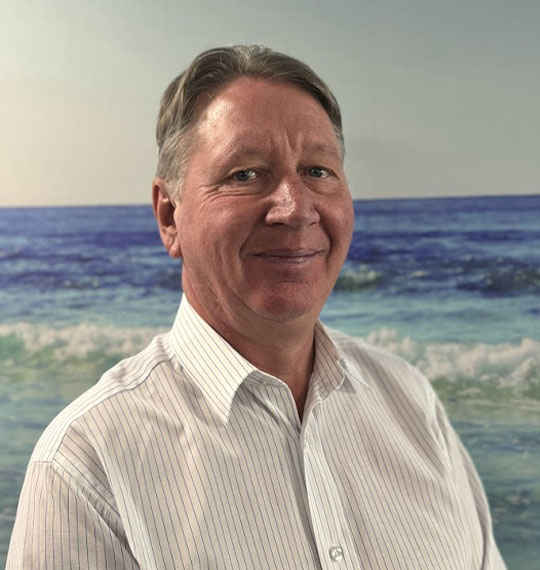
Chris Wybenga
B.Bus, CA
Chris is the Managing Director of the Firm who established the practice in August 1994 and has been responsible for its growth and development since that time.
Chris has over 40-years experience in the Chartered Accountancy profession, predominantly spent in small to medium sized firms, advising small and medium sized businesses and individuals in areas such as taxation and accounting as well as business restructuring and superannuation advice.
Chris remains active in the development of young accountants through mentoring cadets at the Firm.
- 1980 – Commenced employment and part time university studies
- 1985 – Graduated Bachelor of Business from University of Technology, Sydney
- 1986 – Admitted as an Associate Member of the Institute of Chartered Accountants Australia & New Zealand
- 1994 – Established Wybenga & Partners
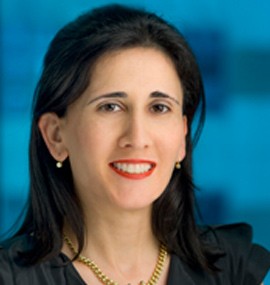
Dianne Bechara
B.Bus, CA
Dianne is responsible for the day-to-day operations and administration of the practice.
Dianne has over 30-years Chartered Accountancy experience and has significant expertise in providing advice and solutions to high-net-worth individuals and their associated entities. Dianne also has considerable knowledge in the areas of taxation, business services, superannuation, and compliance.
Dianne is active in promoting gender equality in the industry through various programs and mentoring opportunities. Dianne is also committed to the development of young accountants and donates considerable time to sharing her expertise.
- 1992 – Graduated Bachelor of Business from University of Technology, Sydney
- 1993 – Commenced employment in acounting profession
- 1996 – Commenced career with Wybenga & Partners
- 1997 – Admitted as an Associate Member of the Institute of Chartered Accountants Australia & New Zealand
- 2002 – Appointed as Director of Wybenga & Partners
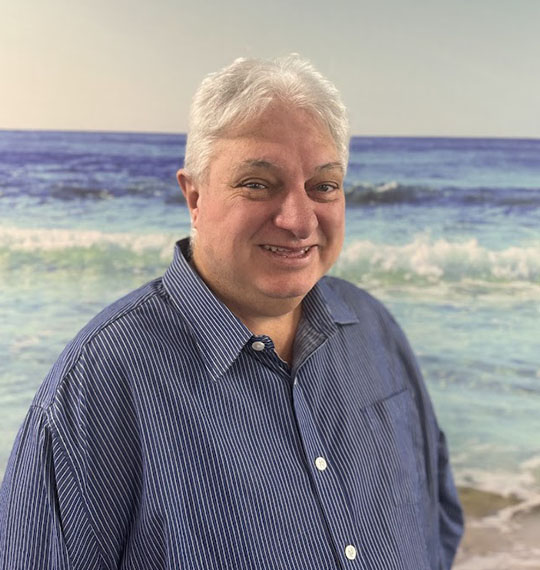
Roger Potter
B.Bus, CA
Roger has over 40-years in the Chartered Accountancy profession and significant expertise in providing advice and solutions to small and medium sized businesses and high-net-worth individuals. He also has extensive experience in the areas of Self-Managed Superannuation Funds and retirement strategies.
- 1985 – Commenced employment and part time university studies
- 1990 – Graduated Bachelor of Business from University of Technology, Sydney
- 1992 – Admitted as an Associate Member of the Institute of Chartered Accountants Australia & New Zealand
- 1998 – Commenced career with Wybenga & Partners
- 2002 – Appointed as Director of Wybenga & Partners
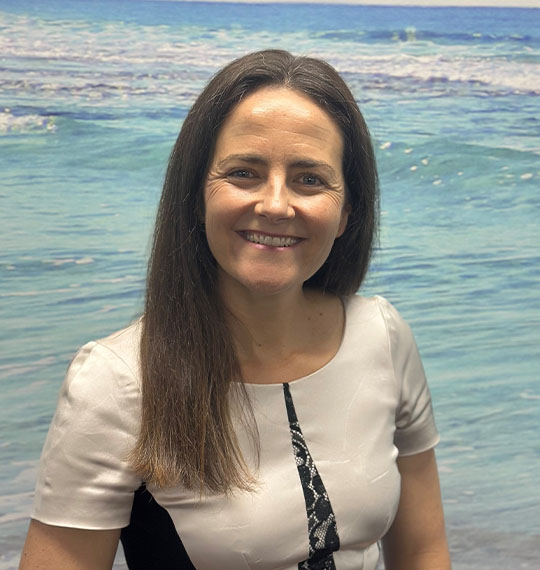
Tess Uncle
B.Sc, M.Com, CA
Tess has been working in Chartered Accounting Firms since 2001 and in this time has had a broad range of experience in superannuation, taxation, business services and financial strategy.
Since 2016, Tess has turned her attention to Financial Planning, earning a Diploma of Financial Planning in 2015 and leading the financial division of Wybenga Group as a Director of Wybenga Financial.
Tess’s mission is to bring the ethics and integrity of her Chartered Accounting background to the area of wealth management.
As a woman in a male dominated field, Tess is active in promoting gender equality in the industry through various programs and mentoring opportunities.
Using her depth of knowledge and experience in tax and accounting Tess is able to demonstrate a level of competence that is unique in the Financial Planning sector.
- 2001 – Commenced employment with Wybenga & Partners and part-time accountancy studies
- 2004 – Graduated Masters of Commerce from the University of New South Wales
- 2005 – Admitted as an Associate Member of the Institute of Chartered Accountants Australia & New Zealand
- 2007 – Promoted to Manager at Wybenga & Partners
- 2012 – Appointed as Associate Director
- 2015 – Awarded a Diploma in Financial Planning
- 2016 – Appointed as Director of Wybenga & Partners Pty Ltd, Wybenga Group Pty Limited and Wybenga Financial Pty Ltd
Schedule a Meeting with Tess

Adam Roberts
B.Bus, B.Sc, CA
Adam has over 18-years experience in Chartered Firms and in this time has had a broad range of experience in superannuation, taxation, and business services. In particular, Adam has had significant experience in MYOB and assisting clients with periodic management reporting.
Adam is responsible for the implementation of technology in the Firm and sourcing new areas of innovation and efficiency.
Adam is active in the development of young accountants and donates considerable time to sharing his expertise.
- 2005 – Commenced employment with Wybenga & Partners and part-time Accountancy Studies
- 2005 – Graduated Bachelor of Science from the University of Western Sydney
- 2007 – Graduated Bachelor of Business from the University of Western Sydney
- 2010 – Admitted as an Associate Member of the Institute of Chartered Accountants Australia & New Zealand
- 2010 – Promoted to Manager at Wybenga & Partners
- 2012 – Appointed as Associate Director
- 2016 – Appointed as Director of Wybenga & Partners
Schedule a Meeting with Adam

Hussein Oubani
B.Bus, CA
Hussein brings over 20 years of experience working in Chartered Accounting Firms, during which he has gained extensive expertise in taxation and business services. He provides advice on various tax issues, including capital gains tax, fringe benefits tax, goods and services tax, and Australia’s tax treaties.
Hussein is dedicated to fostering the growth of young accountants and generously devotes a significant amount of time to sharing his knowledge and expertise.
- 2008 – Commenced employment with Wybenga & Partners and part-time
Accountancy Studies - 2010 – Graduated Bachelor of Business from the University of Western Sydney
- 2012 – Admitted as an Associate Member of the Institute of Chartered Accountants
Australia & New Zealand - 2024 – Appointed as Director of Wybenga & Partners