Latest News
Key tax changes and measures from the 2026 Federal Budget
The major announcements from this year’s Federal Budget and what they mean for accountants and their clients.

.
The government has handed down one of the most significant budgets for tax in recent years, with the budget containing fundamental changes to the taxation of capital gains and trusts, incentives for small businesses and an overhaul of the R&D tax incentive.
Chartered Accountants ANZ (CA ANZ) chief executive Ainslie van Onselen said the budget contained ‘genuine positives’ and acknowledged the government’s willingness to address “long-standing balances”.
Colonial First State head of technical services Craig Day said the Federal Budget was significant from a tax perspective, and in many ways went “further than expected”.
“This budget is particularly significant for individual investors who hold assets that are subject to capital gains tax or who are using negative gearing. For those individuals, there are transitional provisions in place which will help those investors manage the impact,” said Day.
Treasurer Jim Chalmers said the government was hopeful that the tax reforms and productivity measures announced in the 2026-27 budget would back business innovation and investment.
“New tax incentives will encourage more entrepreneurship and back hundreds of millions of dollars in new research and development for young firms and start‑ups,” said Chalmers.
“The government’s productivity package will reduce regulatory costs by $10.2 billion a year, boost long‑run GDP by around $13 billion a year through work underway with states and territories, and promote $400 million in additional R&D among young firms.”
The Treasurer also said the government would consult with stakeholders on key details of the Government’s capital gains tax reforms, including the treatment of early‑stage and start‑up businesses given the unique features of the tech and start‑up sector.
Measures to boost small business
The budget contained a number of measures designed to support business investment including a permanent instant asset write-off and the return of the two‑year loss carry back
The accounting industry and business advocacy groups have welcomed the extension of the $20,000 instant asset write-off for business with turnover under $10 million and the re-introduction of carry loss provisions which allow companies to offset current-year losses against tax paid in the prior two years.
H&R Block Australia’s director of tax communications Mark Chapman said for small businesses navigating today’s difficult trading environment, “the ability to recover previously paid tax “provides genuine breathing room”.
Business Council Chief Executive Bran Black also welcomed the changes, stating that they would “help businesses invest, grow and create jobs”.
CA ANZ tax and superannuation lead Susan Franks said that for years the short-term, year-to-year thresholds for these incentives had created confusion for businesses and advisers, undermining investment planning and adding unnecessary complexity.
“Locking in a stable, long-term setting is exactly the kind of practical reform we’ve been advocating for, as it cuts red tape, supports confidence and lets businesses focus on running and growing their operations, not second-guessing the next Budget,” said Franks.
CA ANZ said the reform demonstrates the “value of stable, durable tax settings that provide clarity rather than uncertainty, and noted that it aligns with the organisation’s long-standing call for predictable frameworks that support productivity and long-term economic resilience”.
A ‘fundamental rewrite’ of the capital gains rules
Franks said this year’s budget “fundamentally rewrites the rules on capital gains”.
“For the first time in 40 years, pre-1985 assets are being brought into the tax net. The 50 per cent discount is replaced by indexation, and a new 30 per cent minimum tax applies to all capital gains,” Franks explained.
“Bringing pre-1985 assets into the tax net for the first time in 40 years is a significant step. Australians who have held assets their entire investment life need clarity and urgent advice on what this means for them.”
Franks warned that the transitional arrangements will be costly as taxpayers will need to document the market value.
“Existing investors made long-term decisions based on the old rules and deserve stronger protection,” she said.
“These changes reshape the incentives for every investor in Australia. Property, shares, crypto, collectibles – if you have an investment portfolio, this budget matters to you.”
CFS head of technical services Craig Day explained that under the proposed measures, for assets purchased before 1 July 2027 and then sold after that date, both the current 50 per cent discount method and the new CPI-based method will apply.
“The existing rules will apply to June 30, and then the CPI indexation method will apply to gains after 1 July,” said Day. “That means asset values are going to need to be determined as at 1 July 2027, which will involve some additional work, including seeking a valuation as at 1 July.
Day also noted that the government has indicated that the ATO will be releasing tools to support the changes.
BDO chief economist Anders Magnusson said that with most of the current CGT discount flowing to owners of existing residential property, reducing it may shift incentives toward other assets.
“[This] should, over time, support more business investment and innovation,” said Magnusson.
The government also confirmed that it would limit negative gearing to new builds from 1 July 2027.
H&R Block Australia’s director of tax communications Mark Chapman said this was structural change that would require careful planning from property investors.
“Those holding established properties as of Tuesday night retain full existing entitlements, but anyone looking to purchase in future will need professional advice to understand their options,” said Chapman.
“The ability to carry forward losses — even if they can no longer be offset against wages — preserves some flexibility.”
Trust distribution tax
The budget also confirmed that the government plans to introduce a 30 per cent minimum tax on discretionary trust distributions.
Treasury outlined that the minimum tax would not apply to other types of trusts such as fixed and widely held trusts, including fixed testamentary trusts, complying superannuation funds, special disability trusts, deceased estates and charitable trusts. Some types of income such as primary production income, certain income relating to vulnerable minors, amounts to which non-resident withholding tax applies, and income from assets of discretionary testamentary trusts existing at announcement would also be excluded.
Under the changes, the government said it will also provide expanded rollover relief for three years from 1 July 2027 to support small businesses and others that wish to restructure out of discretionary trusts into another entity type, such as a company or a fixed trust.
The Council of Small Business Organisations Australia (COSBOA) warned that the proposed changes to the taxation of trusts, along with changes to capital gains tax have the potential to “significantly disrupt the retirement plans of many small businesses”.
“For many Australians, their business is their retirement asset. Changes that reduce the value of business sale proceeds or associated property holdings could have major long-term consequences for owners who have spent decades building their businesses,” said COSBOA chief executive Skye Cappuccio.
Cappuccio said the government must undertake extensive consultation with the small business sector before implementing the proposed reforms.
“Small business needs fairness in the tax system, but it also needs stability, certainty and simplicity,” she said.
BDO tax partner Mark Molesworth said this year’s budget fundamentally shifts how income from investment assets is taxed, with 30 per cent “emerging as the new floor”.
“Over time, that will reshape investment structures with more new investments and businesses likely to be held through companies rather than trusts or personal structures. As always, the devil will be in the detail particularly around transitional measures,” said Molesworth.
Reforms to the R&D tax incentive and venture capital tax incentives
The government also provided details on its plans to reform the research and development tax incentive which include increasing the offset for core R&D expenditure by around 25 to 50 per cent through a 4.5 percentage point increase in core R&D offset rates.
It also intends to reduce the intensity threshold from 2 per cent to 1.5 per cent, which it said wold enable more firms that engage in substantial core R&D to qualify for higher offset rates.
Other proposed changes include removing eligibility of supporting R&D expenditure for the R&DTI and enabling growing firms to retain access to the refundable tax offset for longer by increasing the turnover threshold for the highest offset rate from $20 million to $50 million.
For firms below the $50 million turnover threshold, Treasury said the government would maintain older firms’ eligibility for the higher offset rate while limiting refundability to firms under 10 years of age.
The government will also lift the maximum R&DTI expenditure threshold from $150 million to $200 million; and lift the minimum expenditure threshold from $20,000 to $50,000, with research activities valued below this amount required to be undertaken with a registered Research Service Provider or Cooperative Research Centre to be eligible for the R&DTI.
BDO tax partner Mark Molesworth warned that changes to the R&D tax incentive make it less supportive of early‑stage innovation.
“By narrowing eligibility and time-limiting refundable offsets, the Budget shifts the benefit toward mature, profitable firms,” said Molesworth.
“Even though the headline benefit has been increased, the changes risk reducing Australia’s already low R&D investment over time.”
The government also plans to expand venture capital tax incentives in order to better facilitate venture capital investment and support early stage and growth businesses.
Treasury said that from 1 July 2027 the venture capital limited partnership (VCLP) cap on the asset size of the investee business at the time of investment will be increased to $480 million, from $250 million.
The early stage venture capital limited partnership (ESVCLP) cap on the asset size of the investee business at the time of investment will be increased to $80 million, from $50 million, it added.
The ESVCLP tax incentive cap on the asset size of the investee business, at which investment returns can be fully tax exempt, will also be increased to $420 million, from $250 million and the maximum fund size of ESVCLPs will be increased to $270 million, from $200 million.
The government said the increases will apply to new and existing funds and to new investments they make, including where funds make further investments in businesses already held.
“ESVCLPs must remain in compliance with their existing investment plans or seek approval for a replacement plan. The eligible venture capital investor program will be closed to new applications from 7.30PM (AEST) 12 May 2026,” the budget papers said.
Working Australians tax offset
The budget also contained a measure which introduces a $250 Working Australians Tax Offset from the 2027–28 income tax year.
Treasury outlined that the Working Australians Tax Offset will provide a permanent annual tax offset for Australians for their income derived from work, such as wages and salaries and the business income of sole traders, from 1 July 2027.
“The Working Australians Tax Offset gives workers some immediate relief, but it doesn’t fix the underlying problem,” said Franks.
“With inflation still elevated, bracket creep continues to push Australians into higher tax bands without any increase in real income.
“Indexing personal tax thresholds is the only lasting fix. It restores fairness and stops quiet tax increases from eating into people’s pay.”
12 May 2026
By Miranda Brownlee
accountantsdaily.com.au
Latest Articles

Federal budget 2026: Winners and losers
The Federal Government is selling the 2026-27 budget as a big reform budget. One that will tip the scales to...
Key tax changes and measures from the 2026 Federal Budget
The major announcements from this year's Federal Budget and what they mean for accountants and their...

A breakdown of 2026-27 Federal Budget Themes and Papers.
. Global conflict has severely disrupted global oil supplies and is contributing to higher inflation...

Most Valuable Industries in the World 2026
Check out which industries make up the biggest portion of the global...

Go through the sales process feeling prepared and informed. . Once you've assessed the value of a...

Fringe Benefits Tax (FBT) Guide – Key Checklist & Rates
To meet the Fringe Benefits Tax (FBT) deadline for the year ending 31 March (with a standard due date of 2...
Fringe Benefits Tax (FBT) Guide – Key Checklist & Rates
To meet the Fringe Benefits Tax (FBT) deadline for the year ending 31 March (with a standard due date of 2...

Succession planning to remain major focus for ATO this year
The Tax Office continues to see situations where tax planning decisions from many years ago are giving rise to...

Strategies for Effective Debt Recovery for Small Businesses
When invoices for goods and services go unpaid, it can significantly impact your business’s profitability...

ATO issues new guidance on penalties for non-compliance with STP
The Tax Office has published a draft law administration practice statement outlining its approach to penalties...

Payday Super: 6 Things Small Businesses Need to Know
From 1 July 2026, a major change is coming for employers: Payday Super. . Instead of paying super...

Inflation continues to keep SME owners up at night, survey finds
Inflation remains a top worry for SME owners, a recent survey by Banjo Loans has found. . According to...

Accounting & Bookkeeping
Modern business demands up to date accurate financial information.
We can take care of all your bookkeeping and accounting needs, including the preparation of your annual accounts and periodic management accounts for tax, business appraisal and planning purposes.
We can also assist with meeting your reporting requirements including Business Activity Statements, PAYG Withholding and Instalment Activity Statements.
We will discuss your requirements with you and provide you with tailored information and constructive advice on a regular basis.
If you would like further information you can contact us on (02) 9300 3000 or .

Acquisitions & Mergers
Whether you are considering buying or selling a business, we are able to assist you in this transaction by providing experienced advice.
Each transaction is different and needs to be assessed on its individual merits. There are a number of accounting and taxation opportunities with these transactions and our experience can ensure you are maximising your benefits.
If you would like further information you can contact us on (02) 9300 3000 or .

Budgeting
A good budget is a necessity in a good business plan. It is one of the best business tools we have, allowing us to set financial targets and measure our performance.
In addition to goal setting value, budgets will often improve your chances of acquiring funding. Financers often require budgets as a prerequisite for funding approval.
We have extensive experience with assisting clients in the budgeting process.
If you would like further information you can contact us on (02) 9300 3000 or .

Business Start-Ups
Before commencing a new business, the following are some of the key items that need to be considered:
- Decide on the most suitable structure for your business – sole trader, partnership, trust or company
- Prepare a business plan, cashflow projections, budgets, and trading forecasts
- Assess your finance requirements, advise on the best sources of finance, and draw up the necessary proposals
- Establish a good working relationship with your bank
- Register for a Tax File Number and an Australian Business Number with the ATO
- Complete registration procedures with Australian Securities and Investments Commission
- Deal with company secretarial issues
- Set up a recording system for your internal use and for complying with statutory requirements
Each new business is different and needs to be considered in relation to your individual circumstances and our experience can ensure you are maximising your opportunities.
If you would like further information you can contact us on (02) 9300 3000 or .

Charitable Institutions
Charitable institutions are set up to hold money or assets and carry out activities for the benefit of the community. In Australia, a variety of charitable institutions exist including:
- Various forms of charitable trusts
- Companies limited by guarantee
- Unincorporated associations
- Deductible gift recipients
- Prescribed private fund
Each type of charitable institution brings with it different requirements and benefits. We know the practicalities of these institutions and are able to assist you by:
- Co-ordinating the preparation of constituent documents
- Applying to the ATO for an Australian Business Number and Tax File Number
- Organising tax exemptions where applicable
- Attending to all compliance and statutory filings
If you would like further information you can contact us on (02) 9300 3000 or .

Company Secretary
Company legislation requires businesses to perform many administration tasks which take up a lot of valuable company time.
We are able to assist you in the following areas:
- General advice on company law
- Company formations
- Filing of annual returns on your behalf
- Preparation of all documentation related to minutes and resolutions
- Maintenance of statutory books
- Assistance in changes of directors, shareholders, addresses, and office details
- Bonus Issues
- Share transfers
- Registered Office Facility
If you would like further information you can contact us on (02) 9300 3000 or .

Financial Structures
Having the right financial structure in place for your business or your family means looking at your individual circumstances and ensuring that your assets are being maximised whilst being adequately protected.
We have extensive experience in ensuring our clients have the best financial structure for their needs both now and in the future. We can provide advice on and assist with:
- Effective structures for asset protection
- Effective structures for tax minimisation
- The optimal structure through which to operate your business
- Structures to assist in succession planning and providing for future generations
If you would like further information you can contact us on (02) 9300 3000 or .

GST
Every transaction has GST implications. We have experience with these issues and are able to offer expert advice on the implications of GST for your business. The GST related services we offer include:
- Assistance with registering for GST
- Filing and adjusting GST returns
- ATO audit assistance
- Advice on GST related issues
If you would like further information you can contact us on (02) 9300 3000 or .

Management Consulting
We are practiced in acting as a sounding board for management, bringing to the relationship years of experience in business growth and analysis.
We are able to check that your business is as competitive, focused, and profitable as it can be and we will work with you to address any issues.
If you would like further information you can contact us on (02) 9300 3000 or .

Payroll Services
We can provide a comprehensive and confidential payroll service including:
- Administration of PAYG Withholding, statutory sick pay, annual leave etc
- Australian Taxation Office filing
- Summaries and analyses of staff costs
- Administration of incentive schemes, bonuses and termination payments
- Assistance with payroll tax and workers compensation obligations
If you would like further information you can contact us on (02) 9300 3000 or .

Rental Properties
We can assist in a variety of areas in relation to residential and commercial property including:
- Advice on funding
- Cash flow analysis of property investment
- Guidance in tax related areas including negative gearing and capital gains tax
- Advice on ownership structure
- Preparation of initial land tax returns and land tax variation returns
If you would like further information you can contact us on (02) 9300 3000 or .
Clients of Wybenga & Partners Pty Limited can engage our partner firm, Washington Brown, for a competitive price on their depreciation services: Tax Depreciation Quote Request – Wybenga & Partners Pty Limited Clients

Strategic Planning & Advice
Our Strategic Planning Service is designed to assist our clients to develop financially towards the achievement of their lifetime objectives. Our experience and proven results provide our clients with the security that their financial goals will be met.
Wybenga Financial Pty Ltd is an organisation providing wealth creation and management services to private clients.
If you would like further information you can contact us on (02) 9300 3000 or .

Superannuation
Self-managed superannuation is a flexible means of saving for retirement. It allows you to take control of your superannuation, adopt a customized investment strategy and control fund administration costs.
Superannution law is a delicate area and personalised planning is required for each individual. We have extensive experience in all areas relating to superannuation and can assist in establishing a superannuation fund that will effectively allow you to reach your financial retirement goals.
Services we offer include:
- Establishment of Self Managed Superannuation Funds
- Advice concerning Compliance Matters
- Advice concerning Taxation Benefits
- Advice on Employer obligations
If you would like further information you can contact us on (02) 9300 3000 or .

Taxation
We offer a complete range of taxation services and advice based on proven knowledge and experience. Our proactive approach ensures we deliver a consistent service and build solid relationships.
We will work with you to help reduce your tax exposure and provide services including:
- Advice on all areas of direct and indirect taxation
- Preparation and lodgement of annual income tax returns for all types of entities
- Preparation of PAYG withholding variation applications
- Preparation of activity statements and advice on payment of tax
- Assistance with GST/FBT obligations including preparation and lodgement of relevant forms
- Advice on and implementation of tax effective trust structures for asset protection and tax minimisation
- Management of any ATO audits or disputes
If you would like further information you can contact us on (02) 9300 3000 or .

Trusts
A trust provides a valuable way of protecting the assets you have accumulated for the benefit of yourself and others. A trust can also be an effective structure for running your business.
We have extensive experience with trusts and are able to offer specialist advice on establishment and compliance, ensuring that all statutory requirements are met.
Wybenga & Partners are able to organise for the preparation and execution of documentation involved in Trust formation.
Our Trust administration service includes:
- Minute keeping service
- Annual accounts
- Taxation
- Maintenance of CGT register
- Income distribution
If you would like further information you can contact us on (02) 9300 3000 or .
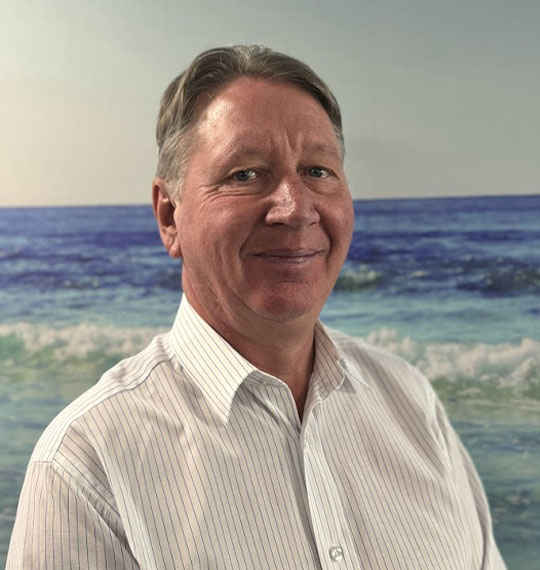
Chris Wybenga
B.Bus, CA
Chris is the Managing Director of the Firm who established the practice in August 1994 and has been responsible for its growth and development since that time.
Chris has over 40-years experience in the Chartered Accountancy profession, predominantly spent in small to medium sized firms, advising small and medium sized businesses and individuals in areas such as taxation and accounting as well as business restructuring and superannuation advice.
Chris remains active in the development of young accountants through mentoring cadets at the Firm.
- 1980 – Commenced employment and part time university studies
- 1985 – Graduated Bachelor of Business from University of Technology, Sydney
- 1986 – Admitted as an Associate Member of the Institute of Chartered Accountants Australia & New Zealand
- 1994 – Established Wybenga & Partners

Dianne Bechara
B.Bus, CA
Dianne is responsible for the day-to-day operations and administration of the practice.
Dianne has over 30-years Chartered Accountancy experience and has significant expertise in providing advice and solutions to high-net-worth individuals and their associated entities. Dianne also has considerable knowledge in the areas of taxation, business services, superannuation, and compliance.
Dianne is active in promoting gender equality in the industry through various programs and mentoring opportunities. Dianne is also committed to the development of young accountants and donates considerable time to sharing her expertise.
- 1992 – Graduated Bachelor of Business from University of Technology, Sydney
- 1993 – Commenced employment in acounting profession
- 1996 – Commenced career with Wybenga & Partners
- 1997 – Admitted as an Associate Member of the Institute of Chartered Accountants Australia & New Zealand
- 2002 – Appointed as Director of Wybenga & Partners
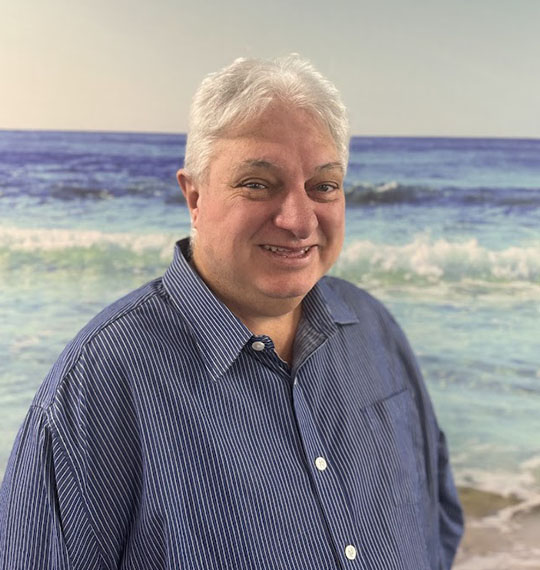
Roger Potter
B.Bus, CA
Roger has over 40-years in the Chartered Accountancy profession and significant expertise in providing advice and solutions to small and medium sized businesses and high-net-worth individuals. He also has extensive experience in the areas of Self-Managed Superannuation Funds and retirement strategies.
- 1985 – Commenced employment and part time university studies
- 1990 – Graduated Bachelor of Business from University of Technology, Sydney
- 1992 – Admitted as an Associate Member of the Institute of Chartered Accountants Australia & New Zealand
- 1998 – Commenced career with Wybenga & Partners
- 2002 – Appointed as Director of Wybenga & Partners
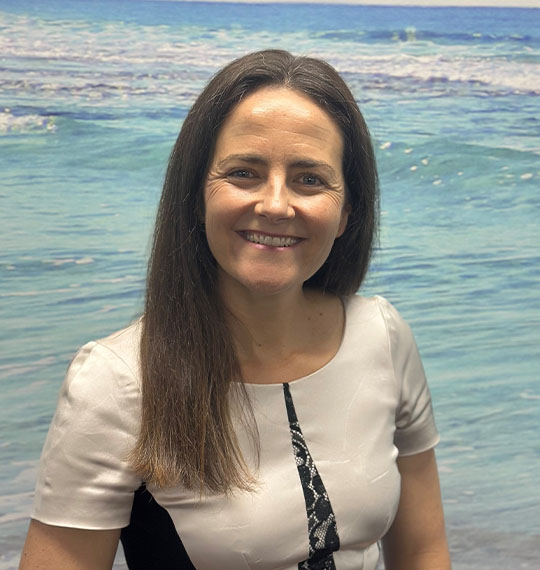
Tess Uncle
B.Sc, M.Com, CA
Tess has been working in Chartered Accounting Firms since 2001 and in this time has had a broad range of experience in superannuation, taxation, business services and financial strategy.
Since 2016, Tess has turned her attention to Financial Planning, earning a Diploma of Financial Planning in 2015 and leading the financial division of Wybenga Group as a Director of Wybenga Financial.
Tess’s mission is to bring the ethics and integrity of her Chartered Accounting background to the area of wealth management.
As a woman in a male dominated field, Tess is active in promoting gender equality in the industry through various programs and mentoring opportunities.
Using her depth of knowledge and experience in tax and accounting Tess is able to demonstrate a level of competence that is unique in the Financial Planning sector.
- 2001 – Commenced employment with Wybenga & Partners and part-time accountancy studies
- 2004 – Graduated Masters of Commerce from the University of New South Wales
- 2005 – Admitted as an Associate Member of the Institute of Chartered Accountants Australia & New Zealand
- 2007 – Promoted to Manager at Wybenga & Partners
- 2012 – Appointed as Associate Director
- 2015 – Awarded a Diploma in Financial Planning
- 2016 – Appointed as Director of Wybenga & Partners Pty Ltd, Wybenga Group Pty Limited and Wybenga Financial Pty Ltd
Schedule a Meeting with Tess
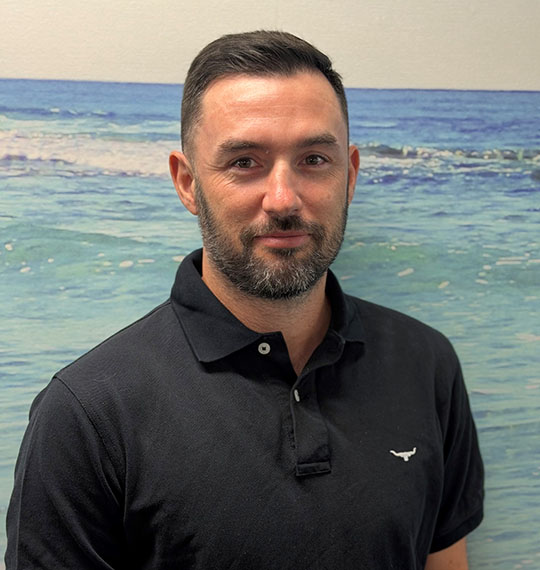
Adam Roberts
B.Bus, B.Sc, CA
Adam has over 18-years experience in Chartered Firms and in this time has had a broad range of experience in superannuation, taxation, and business services. In particular, Adam has had significant experience in MYOB and assisting clients with periodic management reporting.
Adam is responsible for the implementation of technology in the Firm and sourcing new areas of innovation and efficiency.
Adam is active in the development of young accountants and donates considerable time to sharing his expertise.
- 2005 – Commenced employment with Wybenga & Partners and part-time Accountancy Studies
- 2005 – Graduated Bachelor of Science from the University of Western Sydney
- 2007 – Graduated Bachelor of Business from the University of Western Sydney
- 2010 – Admitted as an Associate Member of the Institute of Chartered Accountants Australia & New Zealand
- 2010 – Promoted to Manager at Wybenga & Partners
- 2012 – Appointed as Associate Director
- 2016 – Appointed as Director of Wybenga & Partners
Schedule a Meeting with Adam

Hussein Oubani
B.Bus, CA
Hussein brings over 20 years of experience working in Chartered Accounting Firms, during which he has gained extensive expertise in taxation and business services. He provides advice on various tax issues, including capital gains tax, fringe benefits tax, goods and services tax, and Australia’s tax treaties.
Hussein is dedicated to fostering the growth of young accountants and generously devotes a significant amount of time to sharing his knowledge and expertise.
- 2008 – Commenced employment with Wybenga & Partners and part-time
Accountancy Studies - 2010 – Graduated Bachelor of Business from the University of Western Sydney
- 2012 – Admitted as an Associate Member of the Institute of Chartered Accountants
Australia & New Zealand - 2024 – Appointed as Director of Wybenga & Partners